
00后
China turns tennis tournaments into tourism magnet as cities package matches with culture, food and city experiences_我的网站

一 |
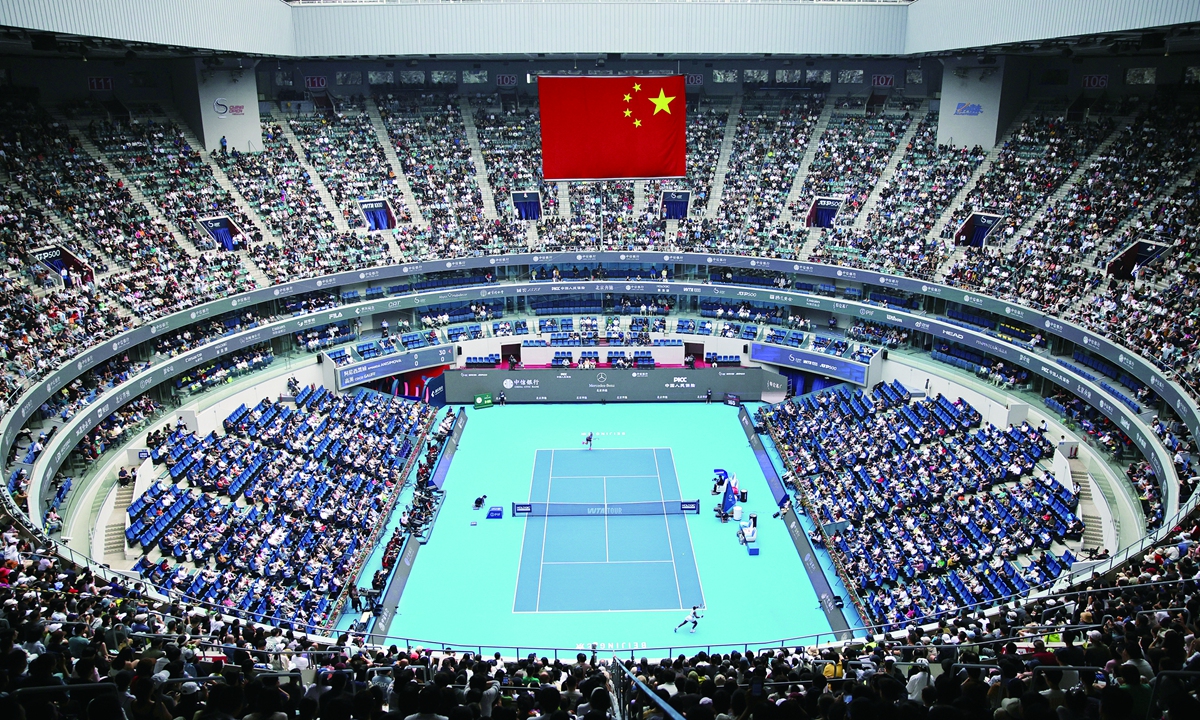
As international tennis tournaments multiply across China this autumn, organizers are increasingly looking beyond the court, seeking to turn a trip to a tournament into a broader travel experience.
The 2026 Chinese tennis season, starting in September, will bring a series of international events to cities including Chengdu, Hangzhou and Suzhou besides flagship events in Beijing and Shanghai.
The growing concentration of tournaments is giving Chinese cities a chance to connect sporting events with local consumption, cultural activities and tourism.
Shanghai offers perhaps the clearest example of how that strategy is developing.
In 2025, the Shanghai Masters attracted more than 250,000 spectators, with about 10 percent coming from overseas and 60 percent from outside Shanghai, according to the Shanghai municipal government. The tournament also generated more than 100 million yuan ($14.8 million) in ticket revenue.
The figures have encouraged organizers and city authorities to think beyond the traditional model of selling a ticket to a tennis match.
During this year's Shanghai Masters, ticket packages will include options combining matches with direct transportation, family experiences and visits to other Shanghai attractions, the organizers have announced.
The approach fits into Shanghai's broader effort to use major sporting events to attract international visitors.
The experience in Shanghai suggests that the relationship between tennis and tourism can work in both directions: a tournament brings people to a city, while the city gives spectators reasons to stay longer and spend money beyond the stadium.
For host cities, making tennis more than a sporting event can also serve as a platform for destination marketing, particularly when the event attracts an international audience.
Sports tourism can offer cities something that conventional sightseeing does not, according to tennis commentator Chen Chi.
"Tennis events can activate destinations and build recognizable identities," Chen told the Global Times. "The international player base and global fan following of tennis give host cities an audience well beyond their local audiences, which is widely seen at the Grand Slam events."
The challenge now is to make those visitors stay longer and explore more of the host city. That is where the "ticket plus" model comes in.
Rather than simply asking visitors to buy a match ticket, organizers are increasingly packaging the tournament with hotels, transportation, attractions and other experiences.

Culture matters
In Suzhou, East China's Jiangsu Province, organizers of the WTA 125 Suzhou Open are trying to connect the tournament with the city's existing cultural resources.
Zhou Yunsong, tournament director of the Suzhou Open, said the timing gives spectators an opportunity to combine a tennis trip with a holiday as it partially overlaps with the annual National Day holidays.
"For our spectators, this is a rare opportunity to combine watching tennis with travel. For domestic tennis fans, they don't have to take time off work as they normally would," Zhou told the Global Times.
The tournament venue, the Yangcheng Lake International Tennis Center, is located near several cultural and commercial areas in Suzhou.
The event has also introduced a hotel-and-tennis package, while organizers have arranged cultural experiences for players, including visits to Suzhou's gardens and local cultural venues.
"To give players an immersive experience of Suzhou's charm, we have planned a range of cultural activities, including visits to the Suzhou Museum, tasting authentic Suzhou cuisine, listening to Kunqu Opera, trying on traditional Chinese qipao and visiting embroidery workshops," Zhou noted.
Zhou sees a broader change in the way people plan trips.
"Traveling to sporting events is becoming a choice for more and more people," he said. "In the past, tourism was about sightseeing - going to a destination, taking photos and checking in. Now, especially among younger generations, people are more inclined to take themed trips."
The idea, he said, is to use the tournament as the starting point for a much wider city experience.
"We hope Suzhou can, with the professional tournament at its core, connect all of Suzhou's tourism resources, including its food, gardens, water towns and shopping, so that visitors can travel around the city for the sake of one match."
Players as ambassadors
For international tennis, this model has another potential advantage: The players themselves can become part of a city's tourism promotion.
Beijing, for instance, is bringing the players themselves into the tourism story. Li Xuhua, general manager of the China Open, said the tournament plans to give players more opportunities to experience the city.
Current world No.1 Jannik Sinner is among the players who are invited to participate in a hutong (traditional alleyway) tour during his stay in Beijing, Li told the Global Times.
The China Open is also expanding its off-site activities this year.
Li said the tournament will work with the local government to establish more match-watching venues in major commercial areas, allowing people to experience the tournament outside the main tennis center.
"The information from the tennis court can go out and reach people around the city," Li said.
For organizers such as Li, the goal is to make the tournament a broader part of the city's cultural and public life.
"We want this rare tennis carnival to be richer and more colorful, and to give fans more time to experience the appeal of tennis," Li said.
The emerging model is still at an early stage as different event organizers are exploring their own strategies. But the direction is becoming clearer: Tournaments are being used not only to fill seats in stadiums, but also to promote cities as travel destinations.
。 据报道,当地时间10月17日,这架从佛罗里达州坦帕起飞的美联航2038航班经过两个小时的飞行,在下午1点15分左右降落新泽西州纽瓦克国际机场。在飞机滑行时,商务舱的一名乘客发现了一条蛇,受惊的乘客们纷纷发出尖叫。这条蛇长约38厘米,头部后方一处黄环。

二 | 当蛇在机舱内移动时,陷入恐慌的乘客们把脚抬起来躲避。

三 | 这条蛇和乘客一起从佛罗里达州抵达新泽西州(图片来源:美国有线电视新闻网)美联航称,机组人员在被乘客提醒有蛇后,立即向机场工作人员请求帮助。纽约和新泽西港务局告诉媒体,飞机一到达登机口,警察和工作人员就登上了飞机,“并移除了花园蛇”。

四 | 据说没有人受伤。港务局称,好在这起事件没有影响机场的运营。根据北卡罗来纳州野生动物资源委员会的说法,各种类型的束带蛇通常被口头称为“花园蛇”。这种蛇是无毒无害的,人们经常能在花园里发现它们,它们能帮助控制害虫。

五 | 束带蛇无毒无害(图片来源:《纽约邮报》)在蛇被移除后,乘客带着他们的行李下了飞机,工作人员对飞机再次进行了搜查,没有发现其他爬行动物。目前还不清楚这条蛇是如何登上飞机的。

六 |
Current article:http://t2rvd.zhuaicaisaanzhenshunnaiwei.bond/news/20260826_97970.html
Published on:00:00:00


1
B费:重点不在于我的助攻数据,我更乐于看到队友进球2
事关地震!警方通报!3
长江商学院:8月中国企业经营状况指数小幅回落至48.34
美国一航班刚落地机舱惊现长蛇,乘客被吓得惊声尖叫5
台风“沙德尔”登陆我国?今年台风为何偏多?6
新安江开启沉浸式七夕江上奇遇7
国家防办、应急管理部向新疆增调中央抗旱物资8
农夫山泉:上半年净利润88.9亿元 同比增长16.6%9
Nuclear submarine INS Arihant test fires Ballistic Missile10
进球网金球实力排名:拉菲尼亚&登贝莱&亚马尔&劳塔罗&萨拉赫前五11
国家能源局综合司关于建立“一带一路”能源合作伙伴关系合作网络“人工智能+能源”工作组的通知12
希勒:霍伊伦心态严重失衡,目前他难以担任曼联前锋13
政声直达丨“京东号”电商集装箱班列首次开行14
“迈开步 动出彩”亮相鄂战全国总决赛15
New Database Shows US Death Penalty Remains as Biased as High Court Ruled in 1972 - DPIC
- 随机推荐
1
メジャーでも観たかった…広島、MLBに行かなかった歴代選手(3)時代が違えばMLB入りも…?2
新赛股份:2026年上半年净利润1.25亿元,同比增长1819.68%3
专访台湾编剧何昕明:创作很孤独,所以要打团体战4
乌克兰总统泽连斯基将哈尔科夫地区的局势归咎于全世界5
China's Pingyao International Photography Festival draws nearly 20,000 works from over 2,600 photographers6
普京准备好国宴,王外长启程出访,董军也动身,印尼全面押注中俄,扒拉文史,普京准备好国宴,王外长启程出访,董军也动身,印尼全面押注中俄7
超级计算机模拟25000次,预测西班牙问鼎8
中俄记者在杭州感受中国文化韵味9
梭子蟹正大量上市,第一批“受害者”已出现!“嘎嘣”一声直接碎了,医生紧急提醒:这习惯得改10
【观点】申银万国:中东局势反复带动PTA价格宽幅震荡11
国内品牌金饰克价重回1400元12
9月13日0—24时,三亚市无新增确诊病例和无症状感染者13
机器人终于学会了“用手感受”:马里兰大学等机构联合研发的触觉残差学习系统,让视觉机器人从“看着做”进化到“摸着做”14
画里有话|儿童床安全容不得半点敷衍15
最强可达超强台风级!“沙德尔”会登陆我国吗?最新研判→